Illinois Rent-A-Camp Cabins: Where They Are and What’s Inside
A Rent-A-Camp cabin can make a state-park stay easier than tent camping, but the name alone doesn’t tell you which locations offer one or what you’ll need to bring. Illinois’ cabins are primitive, and details can vary by location. Here’s what the Illinois Department of Natural Resources confirms—and how to check the rest before you plan around a cabin stay.
What an Illinois Rent-A-Camp cabin is
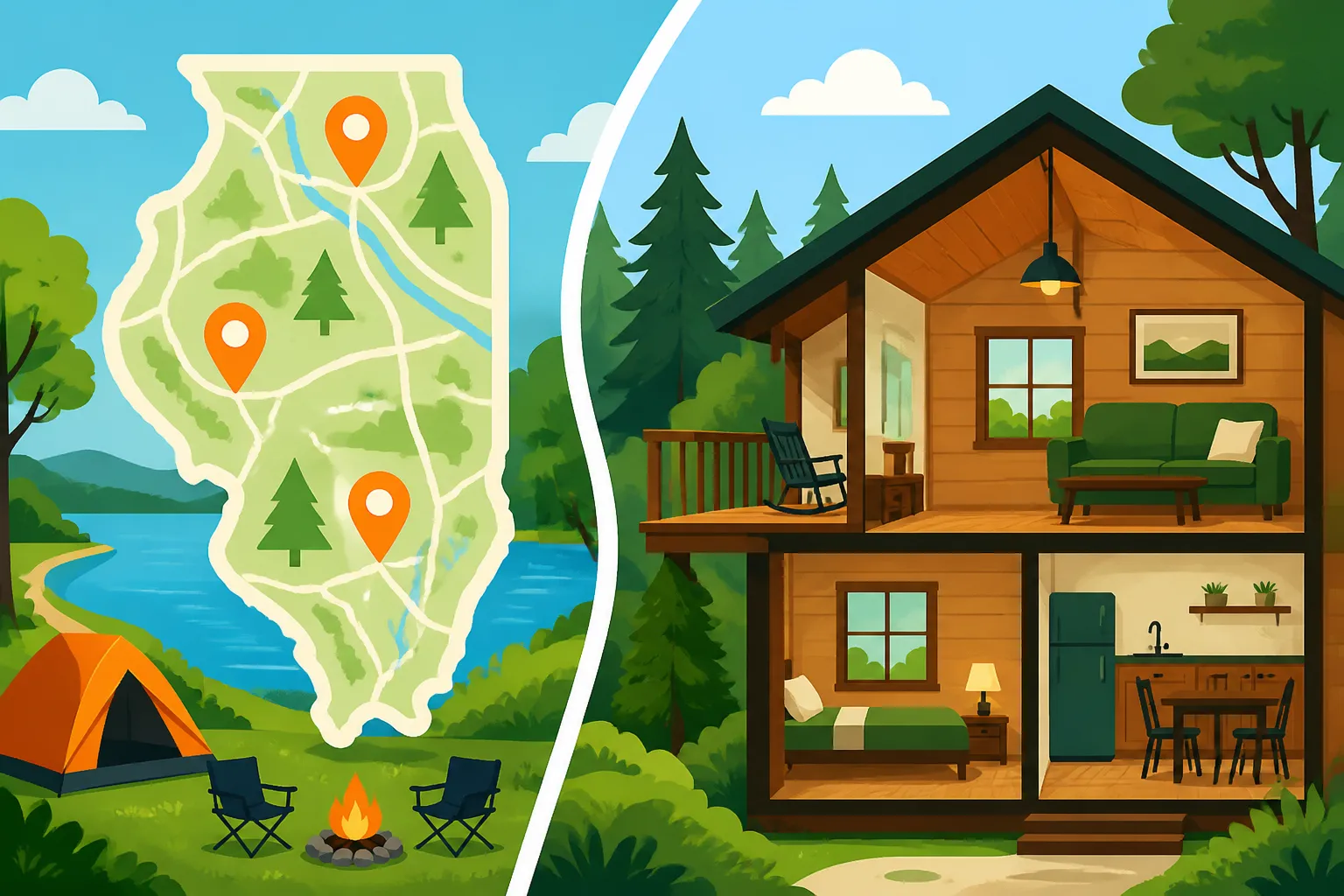
A Rent-A-Camp cabin is a basic overnight shelter, not a fully equipped vacation rental. The Illinois Department of Natural Resources describes Rent-A-Camp cabins as primitive, two-room cabins equipped with the listed basic items: one full-sized bed, two sets of bunk beds, an electric heater, a drop-leaf table with chairs (some locations), and ceiling fans.
That description gives you a useful starting point for planning, but not a complete packing list. It identifies basic furnishings and equipment without establishing every detail you might want to know, such as whether a particular cabin has electricity beyond the listed heater and fans, what cooking facilities are available, or whether bedding and kitchen supplies are included. Don’t treat an item as standard just because it would be common in a vacation rental.
The word primitive matters. Plan to bring what you need for sleeping, meals, personal care, and comfort unless the location’s own information confirms otherwise. If an amenity would change your decision to book, such as a nearby restroom or a way to prepare food, confirm it for the specific cabin rather than relying on a general description.
The furnished beds can make a cabin appealing to people who don’t want to pitch a tent, but they don’t answer every question about sleeping arrangements. Check whether the listed beds suit your group and whether you need to pack linens, pillows, or other bedding. For a closer look at what the stated bed count means for a group, see How Much Sleeping Space Does a Rent-A-Camp Cabin Have?. For a broader comparison of cabin and tent stays, Rent-A-Camp Cabin or Tent Site: Which Suits a Family Weekend? can help you weigh the trade-offs.
A cabin also changes the kind of trip you’re planning, not necessarily the amount of preparation. You may avoid bringing a tent and some of its setup gear, but you still need a plan for food, water, clothing, cleanup, and the walk between your cabin and shared park facilities. A thoughtful packing list starts with the amenities confirmed for your exact location, not with assumptions about what a cabin usually includes.
Where to find cabins—and how to confirm a location
The available facts do not provide a complete list of Illinois parks or campgrounds with Rent-A-Camp cabins. They do identify some places that do not have campground cabins: the Illinois Department of Natural Resources states that Illinois Beach, Chain O’Lakes and WSRC do not have campground cabins. If you’re considering one of those locations, don’t assume a tent site or a nearby lodge means a Rent-A-Camp cabin is available there.
The Illinois Department of Natural Resources also lists Two Rent-A-Camp cabins for the Class A campground. That is a specific listing detail, not a statewide inventory of every cabin location. Before choosing a park, use the department’s current park and campground information to check whether a Rent-A-Camp cabin is actually offered at your intended destination and whether it is available for your dates.
Treat “where are they?” as a location-by-location question. A general page about Illinois camping can introduce the different kinds of overnight stays, but the park’s own listing is the place to confirm a specific cabin. Start with Camping in Illinois State Parks: A Guide to Sites, Cabins and Seasons, then check the destination’s official information for its current accommodation options.
When checking a listing, make sure you’ve found the right kind of overnight accommodation. A park may offer more than one way to stay, and a cabin, lodge room, group facility, or campsite are not interchangeable. Confirm that the option is specifically identified as a Rent-A-Camp cabin before planning around the furnishings described here.
Use this quick comparison to organize what’s known and what still needs checking:
| Planning question | What is confirmed | What to verify for your location |
|---|---|---|
| Are Rent-A-Camp cabins primitive? | Yes; the Illinois Department of Natural Resources describes them as primitive, two-room cabins. | Whether the cabin’s particular layout or facilities suit your group. |
| What basic items are listed? | A bed, bunk beds, an electric heater, a table and chairs at some locations, and ceiling fans. | Which listed items are present at the specific cabin, especially the table and chairs. |
| Is there a cabin at Illinois Beach, Chain O’Lakes, or WSRC? | The department says those places do not have campground cabins. | Whether another type of lodging is available if you still want to visit. |
| How many cabins are listed for the Class A campground? | The department’s listing says there are two Rent-A-Camp cabins. | Which campground or park the listing refers to, and whether a cabin is open for your dates. |
| What else should you pack? | The listed basics do not describe a complete set of guest supplies. | Bedding, cooking equipment, lighting, water access, restrooms, and other needs. |
If you can’t confirm a detail from the park’s information, ask the park through its official contact channels before making plans that depend on it. That is especially important if your group has accessibility needs, a particular sleeping arrangement, or a must-have facility.
What is included—and what not to assume
The listed equipment is helpful, but a short inventory can be easy to overread. It tells you about specified basic items; it does not mean the cabin comes with every household convenience. Make your packing decisions around confirmed details, not expectations based on cabins at other parks or private rental properties.
For example, the description names an electric heater and ceiling fans. It does not, by itself, answer every question about electrical outlets, appliance use, lighting, or other power needs. If you rely on an electrical device, confirm the relevant facilities for the cabin rather than inferring them from the heater or fans. Do Rent-A-Camp Cabins Have Electricity? is useful background, but the specific site’s information should guide your final decision.
The table and chairs also need a little care in interpretation: the description says they are at some locations. Don’t count on them being in every cabin. If you want a place to eat indoors or set down supplies, confirm whether the cabin you’re considering includes them. Likewise, the listed bed arrangement doesn’t tell you whether sheets, blankets, pillows, or towels are supplied. Ask or plan to bring what your group needs.
Cooking is another common source of mistaken assumptions. The supplied cabin description doesn’t specify a stove, refrigerator, cookware, dishes, or indoor food-preparation space. Don’t plan a menu that depends on those items until you have confirmed them. If cooking outdoors is part of your plan, check the park’s current rules and facilities for that location rather than assuming the cabin’s furnishings include cooking equipment. Cooking at a Rent-A-Camp Cabin: Charcoal Grills and Picnic Tables offers more to consider when planning meals.
Restrooms and water deserve the same approach. The basic cabin description doesn’t say whether a cabin has a private bathroom, where the nearest restroom is, or what water is available. Those are location-specific planning questions. The article Bathrooms and Running Water Near a Rent-A-Camp Cabin can help you identify what to ask, but verify the answer for the cabin and campground you’re considering.
A useful rule is to divide your checklist into “confirmed,” “not confirmed,” and “not needed.” Put only details stated by the location in the first column. Move everything else—including conveniences you’ve had at another cabin—to the second until you verify it. That simple distinction can prevent an inconvenient arrival, particularly when your group is traveling with children, older adults, or anyone who needs a specific facility.
Build a packing plan around the cabin, not the name
A cabin can reduce some tent-camping tasks, but it doesn’t eliminate the need to pack carefully. Start with your own group’s needs, then check each cabin detail that affects what you can leave at home. A general cabin label is not a substitute for an inventory of what the specific accommodation provides.
Sleeping and personal comfort
The bed and bunk arrangement gives you a basis for thinking about who will sleep where, but confirm that the setup works for your group. Decide whether anyone needs a particular mattress, extra warmth, a sleep aid, or a separate sleeping arrangement. Since the listed furnishings do not settle whether bedding is included, check before leaving sheets, blankets, or pillows behind.
Think through temperature and comfort as well. The description includes an electric heater and ceiling fans, but those items don’t guarantee that every person will be comfortable in all conditions. Pack clothing and sleepwear appropriate to the expected weather, and check the park’s seasonal information before you choose dates. Illinois State Parks by Season: What Opens, Closes and Changes can help you think about how a seasonal visit affects your plans.
Meals and cleanup
Make a meal plan that works even if the cabin has no cooking equipment. Confirm what the park provides before packing around a stove, refrigerator, cookware, or dishes. If those items are not confirmed, consider meals that can be prepared with the gear you know you can bring and use at the location.
Plan how you’ll store food and clean up after meals, too. The cabin’s basic furnishing list does not describe food-storage facilities or waste arrangements. Check the campground’s current information and rules for your site. Bringing sealed containers and a cleanup routine can make a stay more manageable, but follow the location’s instructions rather than assuming a particular method is allowed or available.
Clothing, lighting, and useful gear
Pack for both indoor time and moving around the campground. Even when the cabin gives you a roof and beds, you may still need outdoor clothing, sturdy footwear, rain protection, and a light source for getting between facilities after dark. Confirm what lighting is provided inside and around the cabin if that matters to your group.
A cabin-oriented gear list should be selective, not automatically lighter. You may not need tent-specific items, but you may need bedding, food-preparation gear, personal-care supplies, and items that a full-service rental would normally provide. Camping Gear to Bring, and Skip, for a Rent-A-Camp Cabin Stay can help you sort essentials from equipment you can leave behind once the cabin’s inventory is confirmed.
Accessibility and group needs
Don’t assume the description of beds and basic furnishings tells you whether a cabin fits a mobility, sensory, medical, or other access need. Ask about the route to the cabin, the entry, interior layout, nearby facilities, and any feature your group relies on. If a detail is essential, get a location-specific answer before choosing dates.
The same is true for a group with different sleep schedules, children, or guests who need more space to move around. A two-room cabin may sound like a good fit, but the general description does not provide dimensions or describe how each room is arranged. Confirm what the actual listing says, and ask the park if you need clarification. For an overview of accessible camping considerations, see Accessible Camping at Illinois State Parks: Sites, Pads and Entrances.
How to choose a park and dates
Start with the experience you want, then look for a cabin at a park that can support it. A cabin doesn’t guarantee that the surrounding campground has the facilities or activities your group expects. Review the park’s own information for the campground setting, available services, and seasonal details before you commit to a destination.
Once you have a possible park, confirm that a Rent-A-Camp cabin is listed there. Then check availability for your dates through the official information or reservation system identified by the Illinois Department of Natural Resources. The details in a general description won’t tell you whether a specific cabin is available, and a listing’s existence is not the same as an open reservation.
Consider the trip’s practical shape as well as the cabin itself. Think about how much time you plan to spend at the park, whether you need to carry supplies between your vehicle and the cabin, and how your group will handle meals and shared facilities. If you expect to spend most of your time exploring the park, a basic cabin may be enough. If you plan to spend substantial time indoors, verify comfort and amenity details more closely.
Season can affect what is available around a campground, so check current park information rather than assuming every facility operates the same way throughout the year. Water service, restrooms, trails, and other amenities may have seasonal schedules or conditions; don’t infer their status from the cabin description. The park’s own current notices are the right place to confirm what will be operating for your trip.
If a particular park does not have a campground cabin, decide whether another kind of stay or a different destination meets your needs. Illinois Beach, Chain O’Lakes and WSRC do not have campground cabins, according to the Illinois Department of Natural Resources. A campsite might still work if you’re equipped to camp that way, but it isn’t a substitute for a cabin. For a wider look at overnight choices, Illinois State Park Lodges: Overnight Rooms and What Else They Offer explains a different kind of accommodation.
Questions to ask before you reserve
A short check before booking can save you from packing the wrong gear or arriving with an unmet expectation. Focus on the cabin you intend to use, not just on the general Rent-A-Camp description. If two cabins or locations appear similar, confirm that the answer applies to the one you’re considering.
Use questions such as these:
- Is this accommodation specifically a Rent-A-Camp cabin?
- What furnishings and equipment are in this cabin?
- Does it have the drop-leaf table and chairs?
- Are bedding and linens provided, or should guests bring them?
- What cooking facilities, if any, can guests use?
- What restroom and water facilities are available nearby?
- What electrical features are available, and are there limits that matter for my equipment?
- How accessible are the route, entrance, and interior for my group?
- What seasonal conditions or facility closures should I plan for?
- What are the current arrival, key-pickup, checkout, and cabin-cleanup instructions?
Those questions are prompts, not claims that every cabin has the same answers. Check the park’s official information for current procedures, and contact the park if a detail is unclear. For arrival and departure preparation, Picking Up the Keys: Arriving for a Rent-A-Camp Cabin Weekend and Cleaning Up a Rent-A-Camp Cabin Before Checkout cover practical parts of the stay to confirm.
Before you finalize your packing, compare your list with the answers you received. Remove gear only when you know the cabin or campground supplies the equivalent. Add any items required by the park’s instructions, and keep important personal items—such as medications and equipment your group depends on—in your own packing plan.
A simple planning sequence
Use this sequence to keep a cabin trip from turning into guesswork:
- Choose the park for the visit you want. Consider the campground and park experience, not just the word “cabin.”
- Confirm that the park lists a Rent-A-Camp cabin. Don’t assume every Illinois state park has one.
- Check the specific cabin’s information. Separate details that are confirmed from items that are simply not mentioned.
- Ask about must-have amenities. Focus on sleeping, cooking, water, restrooms, accessibility, and any electrical needs.
- Check dates and current operating information. Use the official information for availability and seasonal conditions.
- Pack for the gaps. Bring items that aren’t confirmed as provided, while following the park’s rules and instructions.
- Recheck details before departure. Current notices and location-specific guidance matter more than assumptions made when you first started planning.
This approach is especially useful if you’re comparing a cabin with a tent site or a lodge. A cabin may offer more shelter and furnished sleeping surfaces than a tent campsite, while still leaving guests responsible for many supplies. A lodge room may provide a different level of indoor accommodation, but it is a separate option with its own terms and facilities. Compare what each actual listing says instead of judging by the accommodation name alone.
For a first visit, leave room in your plan for practical questions that don’t appear in the basic cabin description. Where will you keep food? How will you wash dishes or handle waste? What will your group do if weather changes the plan? Who needs to know the route to shared facilities? These are not reasons to avoid a cabin. They are details that help you use a primitive cabin comfortably and avoid expecting it to function like a fully serviced rental.
The main takeaway is simple: use the listed furniture and equipment as a starting point, not as a complete inventory. Confirm the location, verify what is included at that cabin, and pack for everything the official information does not promise.
Frequently Asked Questions
Are Rent-A-Camp cabins available at every Illinois state park?
No. Check the Illinois Department of Natural Resources’ information for your intended park. The department specifically says Illinois Beach, Chain O’Lakes and WSRC do not have campground cabins.
What furnishings are listed for Rent-A-Camp cabins?
The general description includes a full-sized bed, bunk beds, an electric heater, ceiling fans, and a drop-leaf table with chairs at some locations. Confirm the specific cabin’s inventory before deciding what to bring.
Does the basic description tell me whether linens or cooking equipment are supplied?
No. It lists basic furnishings but does not establish whether linens, cookware, or other guest supplies are included. Ask the park or check the specific cabin information.
How can I tell whether a cabin will meet my group’s needs?
Check the location-specific information and ask about any essential detail, including sleeping arrangements, facilities, accessibility, and equipment. Don’t rely on a general cabin description for an individual cabin’s layout or amenities.
Sources
- Illinois Department of Natural Resources — Rent-A-Camp (checked November 23, 2026)
- Illinois Department of Natural Resources (checked November 23, 2026)
- Illinois Department of Natural Resources (checked November 23, 2026)
Disclaimer
This article is for general informational purposes only and does not constitute professional advice. Laws, prices and regulations vary by location and change over time. Consult a qualified professional for guidance on your specific situation. Illinois Camping & RV is not a government agency and is not affiliated with any government agency.